SUPERVISOR LINDA PARKS HONORED AS 2012 CITIZEN OF THE YEAR!

The Las Virgenes Homeowners Federation named Ventura County District 2 Supervisor Linda Parks as its 2012 Citizen of the Year (COY) at its annual banquet. Supervisor Parks has been an open space and environmental superstar for more than two decades.  

Click on ”Photos” above and link below for details in LVHF May Newsletter.

FEDERATION’S 2012 CITIZEN OF THE YEAR – SUPERVISOR LINDA PARKS

THE “EDGE” STRIKES BACK!

It’s been several months since the Coastal Commission denied David Evans – aka “The Edge” – permission to grade a highway 1700’ up the ridge east of Malibu Lagoon so he could build five mega-mansions on the most prominent coastal ridgeline between Santa Monica and Point Mugu, a ridgeline that can be seen from coastal viewpoints all around Santa Monica Bay.

The project was denied because, though the five applications were filed under five different names, the Coastal Commission staff uncovered evidence that the five applicants were business associates or in-laws in Ireland and, therefore, shared a unity of interest and were in fact proposing what amounted to a tract of five mansions complete with water line and access road.

Things were quiet for a while after the denial, but they didn’t stay that way for long. AB 2226 slipped through the Assembly by a one-sided 53-11 vote (our Assemblymember Julia Brownley was one of the 11 no votes). If AB 2226 becomes law, it would eliminate the grounds by which the Coastal Commission had turned down The Edge project.

At first glance the Assembly bill seems harmless enough; AB 2226 would amend the Government Code to require state agencies to refer to the Evidence Code to determine who owns full title to a piece of property rather than referring  to the “threshold of substantial evidence”, a less demanding standard state agencies now use. 

The difference between the standards of the Evidence Code and the “threshold of substantial evidence” may be difficult for laymen to grasp, but it is great enough for three state agencies that deal in land use issues – the Coastal Commission, the State Lands Commission, and the San Francisco Bay Conservation and Development Commission, to write a strongly worded letter to Assemblyman Ben Hueso, the author of AB 2226, urging him to reconsider his support for the bill, on the grounds that the bill increases the burden of proof of ownership required of state agencies without providing those agencies with the legal tools, such as subpoenas, powers of discovery, and sworn testimony to obtain that proof of ownership. The letter from the three state land use agencies claims this would “have a chilling effect on the state’s ability to effectively carry out their statutory land use planning activities and other regulatory proceedings”.  

The letter continues, “We have noted with increasing frequency the practice of landowners shielding their identity from state agencies through the formation of Limited Liability Corporations (LLCs) and other similar corporate entities … AB 2226 would make it demonstrably more difficult for state agencies to pierce the corporate veil or otherwise determine the actual business realities behind mere record title to land ownership …”

“Increasing the burden of proof that state agencies must meet without the commensurate tools of discovery would have a chilling effect on the state’s ability to effectively carry out their statutory land use planning activities and other regulatory proceedings.”

The letter concludes, “We can foresee that this bill may have far-reaching impacts on numerous other state agencies …”   

The Federation is very familiar with this strategy of developer landowners shielding their “unity of interest” and true ownership under cover of different LLCs etc. and therefore the true environmental, cumulative impacts of a project are hidden.

AB 2226 heads to the Senate next month…                       

MALIBU HOTEL PROJECT RETURNS – EIR SCOPING MEETING 5/16/2012

The City of Malibu is preparing an EIR for a major hotel project at the end of Malibu Canyon Road where it joins Pacific Coast Highway. The City has scheduled a scoping meeting on the scope and content of the EIR on Wednesday, May 16th at 6:30 pm in the Multi-purpose Room at Malibu City Hall, 23825 Stuart Ranch Road.

The project, known as the Rancho Malibu Hotel, consists of  275,000 square feet of development on 27.8 acres, consisting of a 146 room luxury hotel resort a main hotel, 21 detached two-story casitas, retail shops, lobby bar, library, ballrooms, meeting rooms, fitness center and spa. The project will include 543 parking spaces, most of them to be located in a 166,827 square foot underground parking structure. 189,760 cubic yards of earth will be exported from the site.

The Civic Center area of Malibu is not served by a sewer system, so each individual project is supposed to provide its own onsite wastewater treatment system (OWTS).

On November 5, 2009, the Los Angeles Regional Water Quality Control Board prohibited onsite wastewater disposal systems in the Malibu Civic Center area except for those identified in the Table 4-zz list. The Rancho Malibu Hotel project is within the Malibu Civic Center area but was not originally included in the Table 4-zz list, although the developer has made a request to the RWQCB suggesting that it should have been. The City is proposing an alternative construction of a new state of the art water treatment facility to handle wastewater from the Civic Center area.

The applicant for the Rancho Malibu Hotel Project listed in the City’s Notice of Preparation is attorney:  Fred Gaines, Green Acres, LLC, P.O. Box 6528, Malibu, CA 90264.

Mr. Gaines is a City of Calabasas Councilmember and the Mayor Pro Tem. More to come on this project…


STATE SENATE APPROVES SENATOR FRAN PAVLEY’S BLIGHT PREVENTION BILL

The California State Senate unanimously approved Senate Bill 1472, authored by Senator Fran Pavley (D-Agoura Hills) this morning.  SB 1472 is a bill that will provide local governments additional tools to fight blight caused by foreclosed properties primarily owned by banks and financial institutions. 

SB 1472 is part of the package of legislation sponsored by the State Attorney General legislative package, the “The California Homeowner Bill of Rights.”  The bill now goes to the California State Assembly for consideration.  

Senator Pavley said, “Bank and financial institution’s foreclosed homes can create a nuisance for neighboring residents. Properties not being cared for lowers the value of surrounding homes, and abandoned properties attract gangs, drug users, and squatters. Untended properties also create mosquito abatement problems and increased fire risks.”

NO SOLAR PANELS AT LVUSD HIGH SCHOOLS – BOARD VOTES 5-0

Enough residents attended the LVUSD board meeting last night to convince the five board members to vote 5-0 to NOT okay building the solar panels at either Agoura or Calabasas High Schools. Several Old Agoura residents who live near Agoura High spoke of the possible additional visual pollution added to the tacky moving sign boards already there, referencing the existing example at Taft High in Woodland Hills. Jess Thomas coupled Kirk Allegro’s excellent letter points with his own technical comments about the proposed plants lack of efficiency and uncertain fiscal benefits. The board seemed genuinely pleased to have received our thoughtful concerns and voted accordingly. Larry Brown was the only non-Old Agoura resident to testify.

STANDARD PACIFIC IS BACK!

Those who listened to last night’s Planning Commission meeting on Calabasas TV heard the announcement that a revised version of the Standard Pacific development is going to be coming back for hearing before the City. The project location is on the east side of Las Virgenes Road just north of the Water District Headquarters. This time around the developer is proposing 80 townhomes instead of the 86 condos approved by the City a couple of years ago.

Staff says the revised project will probably not come up for public hearing before the Planning Commission for at least six months, but concerned citizens should keep track of it’s progress. Since Standard Pacific and its EIR have already been approved by the City, there will probably not be lengthy environmental documentation or extensive hearings this time around.

For more information, contact Geoff Starns, Senior Planner, at the city of Calabasas  818.224.1600.

Federation Congratulates Malibu City Council Winners: Skylar Peak, John Sibert and Joan House


Newcomer Skylar Peak, incumbent John Sibert and former Councilmember Joan House delivered the votes on April 10, and won the three Malibu City Council seats up for grabs.

Skylar finished first with 1,644 votes, Sibert second with 1,288 votes and House third with 1,142 votes.

The other 4 candidates in the race finished well back of the front runners. Hans Laetz finished fourth with 766 votes, followed by Hamish Patterson with 737, Andy Lyon with 688 and Missy Zeitsoff with 608 votes.

OBAMA PROPOSES LAND ACQUISITION FUNDS FOR SANTA MONICAS

Thirty-five years ago the Los Angeles Times Magazine ran a magnificent, full page color photo of Piuma Ridge and Malibu Canyon under the heading of “Last Chance for a Wild, Wonderful World”.

By then it had been twelve years since Sue Nelson and several other Brentwood residents had first suggested that Congress should establish a National Park in the Santa Monica Mountains.

Over the years there hadn’t been much media interest in the idea of a Great Park or any other park in the Santa Monica Mountains, and the media didn’t pay much attention to Sue Nelson’s proposal, either. In those days the media and most elected officials were more interested in promoting growth in “The Hills” than in preserving them for public enjoyment.

In fact, in those days few people who didn’t actually live there were even aware of the majestic beauty of the Santa Monica Mountains. The great majority of the Los Angeles population lived in urban areas of the Valley and the Westside and had little chance to get to know the scenic mountains and canyons between the 101 Freeway and Pacific Coast Highway (PCH) because almost all that land was privately owned by developers, subdividers, and real estate investors who bristled at any talk about the State buying them out.

Just about the only park in the Santa Monica Mountains thirty-five years ago was Tapia County Park, and LVMWD had made Tapia Park less attractive to the public by building the Tapia Treatment Plant, with its sounds, odors, and effluent discharges next to the creek where children waded and splashed.

Malibu Creek State Park was still “Century Ranch”, a private movie ranch closed to the public, as was Paramount Ranch. The State had just bought Trippett Ranch, the first installment of Topanga State Park, but had turned around and leased it to one of the biggest developers in the Mountains, who proceeded to use it as his personal horse ranch.

But, by the 1960’s, more and more people were moving into scenic mountain communities like Brentwood, Topanga, and Monte Nido, while others were taking a closer look at the scenery when they drove through the deep gorge of Malibu Canyon on the way to the beach. Before long there were others beginning to dream Sue Nelson’s impossible dream.

Then, in 1976, Congressman Tony Beilenson introduced legislation in Congress proposing the creation of a “Santa Monica Mountains and Seashore National Park”. Congress didn’t grab on to that idea at first, but Tony kept at it, making the park his highest legislative priority.

By 1978, Tony Beilenson had managed to get Public Law 95-625, the Omnibus Bill, establishing the “Santa Monica Mountains National Recreation Area”, passed by the House of Representatives, but the bill stalled in the Senate, and, with Congress about to adjourn, time was running out. That was the meaning of the large photo and its caption in the Los Angeles Times magazine that fall.                

On the evening of October 12, 1978, with Congress set to adjourn in just a couple of days, and with the Omnibus Bill still stalled in the Senate, a very anxious group of park supporters met in an office in West Los Angeles to figure out how to persuade the Senate to adopt Public Law 95-625 .

As the evening dragged on with no word from Washington, tension built up in the room. Then, about 9:30, when most of us had given up hope and were getting ready to go home, the pay phone in the hall suddenly rang. We all looked at each other, too nervous to get up to answer it at first. Then Margot Feuer got up, walked out to the hall, and returned a few minutes later.

That late-night call on the pay phone in the hall was from Congressman Tony Beilenson’s office in Washington, letting us know that Public Law 95-625 had just passed the Senate. For the first time it looked like the “wild, wonderful world” of the Santa Monica Mountains, might have a future, after all.

Development interests, which had blocked creation of the Park for years, were taken by surprise, but rallied quickly and sent off a blizzard of letters and telegrams urging President Carter to veto Public Law 95-625. It was too late.  On November 10, 1978 President Jimmy Carter signed Public Law 95-625. The legislation authorized creation of a 153,075 acre outer protection boundary that took in most of the Mountains from the 405 Freeway west to Point Mugu, along with Cheeseboro and Palo Comado canyons north of the Freeway.

But in 1978 almost none of the land within the outer protection boundary of the new park belonged to the Federal Government; it was private property subject to whatever zoning and development plans its owners and the local authorities were willing to allow – and that was usually quite a bit. The creation of a national park didn’t make much of an impression on these folks at first.

For example, The Park Service wanted to purchase the old Sampo Ranch in the upper Las Virgenes Valley and turn it into the main visitor center for the park, but the developer, Currey-Riach, had already filed plans with the County for a zone change and tract map that would allow 1100 homes and condominiums and over a million square feet of commercial floor space on their Lost Hills property, and that’s what the Board of Supervisors eventually approved.

Another possible site for the visitor center was the old Claretville property at Las Virgenes and Mulholland (now King Gillette). It had been purchased by an outfit known as the Church Universal and Triumphant, which had announced plans to build a large city on the site.

The Park Service also had its eyes set on Paramount Ranch, where Richard Mark had already filed a zone change with the County to build a tract of 300 homes, while Oren Realty was planning to build 1700 condominiums, a shopping center, and an industrial park in place of the great oaks in Cheeseboro Canyon.

 Buying the Land

While most of our great national parks (Yellowstone, etc.) were created out of lands that were already owned by the Federal Government, the Santa Monica Mountains National Recreation Area has had to be purchased one piece at a time from private owners – many of them developers – who had become used to looking on their land as a business investment and a source of personal profit. 

The money to buy the land that would become this “Great Park” in the Santa Monica Mountains would have be to be assembled from scratch out of whatever funds Congress could be persuaded to appropriate each year from the Land and Water Conservation Fund – a special fund financed by revenue from consumptive uses (mining, grazing, oil drilling, etc.) on federal lands.

With one stroke of the pen, Congress had authorized the creation of the world’s largest urban national park, but yet to be determined was how Congress was going to be able to come up with the money to buy more than a small fraction of the 153,705 acres within the outer protection boundary established by Public Law 95-625.

Public Law 95-625 had authorized the Secretary of the Interior to spend a total of $155 million from the Land and Water Conservation Fund to purchase land for the Santa Monica Mountains National Recreation Area, but each annual appropriation first had to be approved by Congress in that year’s federal budget, and the Santa Monica Mountains had to compete for that money with supporters of many other parks and other federal projects throughout the country that lobbied each year for the limited budget allocation of Land And Water Conservation fund money.

Because of the intense development pressure on potential park acquisitions, Tony Beilenson and other park supporters urged Congress to make the $155 million in authorized land acquisition money available over the next five years.

The Park Service spent the first year of the park drawing up the required Land Protection Plan that listed the properties that it had determined were its highest priorities for acquisition. When Congress began to make funds available, they were used to purchase key properties listed in the Land Protection Plan. These properties included Paramount Ranch, Rancho Sierra Vista in Ventura County, and Diamond X.

Land acquisition seemed to be going smoothly at first. In 1980 the Park Service received an appropriation of $20 million from Congress and entered into negotiations to purchase the Sampo Ranch (Lost Hills) property in the upper Las Virgenes Valley.

But the political climate in Washington soon changed dramatically. Ronald Reagan took office as President in 1981 and appointed James Watt as his Secretary of the Interior. Watt turned out to be radically opposed to parks in general and the Santa Monica Mountains in particular. The negotiations for Sampo Ranch were terminated, and most of the $20 million in land acquisition funds already appropriated by Congress was reverted back to the treasury, leaving the Park Service with no funds to buy land for the next several years.

The same development interests who had opposed establishment of the Park in the first place now moved in for the kill. James Watt and his developer friends lobbied in Washington for the complete de-authorization of the Santa Monica Mountains National Recreation Area (i.e. to repeal Public Law 95-625 and terminate the park.)

At one point park opponents – possibly with Watt’s encouragement – even called in the FBI, accusing the Park Service of depriving Santa Monica Mountains landowners of their “rights”. For a short time all Park Service files were sealed by the FBI. Though that restriction was soon lifted, land acquisition funds for the Santa Monica Mountains National Recreation Area dried up, and no park land was purchased for the next several years.

By 1985 Congress had begun to loosen the purse strings a little and had resumed buying land for the park, but a great deal of momentum had been lost. The County had approved the Lost Hills development and Currey Riach had begun grading the building sites that would later become Archstone and Deer Springs, precluding any purchase of Sampo Ranch by the Park Service.

Still hoping to acquire land that could become the main visitor center for the park, the Park Service entered into negotiations with the Church Universal and Triumphant for the old Claretville Seminary property, but the Church Universal continued to resist selling to the Park Service. Then, just as it seemed their resistance was weakening a new organization named “Soka” paid the inflated price of $15 million for the Church Universal property, setting in motion a major land use conflict that would eventually draw in Monte Nido and the rest of the Federation, the Santa Monica Mountains Conservancy, and the Sierra Club in a 25-year-long legal battle.

During Bill Clinton’s presidency in the 1990’s less and less money was allocated from the Land and Water Conservation Fund with each passing year, and, by 1998, the federal money available to buy park land in the Santa Monica Mountains had once more dried up almost completely. Conditions were even worse under George Bush, when Land and Water Conservation Fund money was diverted to funding other, non-park, government programs and to funding the wars in Iraq and Afghanistan.

Since the 1990’s Congress has appropriated no new federal money to purchase new Park Service lands for the Santa Monica Mountains National Recreation Area. The major park purchases in the last fifteen years (Ahmanson Ranch, Soka) have been made with state bond money rather than federal Land and Water Conservation funds. With the state in a budget crisis, state funds have now also dried up, limiting the ability of both State and federal park agencies to save additional land and complete the Land Protection Plan for the Santa Monica Mountains National Recreation Area.

If you look at a map of land owned by state and federal park agencies in the Santa Monicas today, much of it looks like so much Swiss cheese, riddled with inholdings or in small publicly-owned fragments scattered among large areas of private holdings.

Of the land within the outer protection boundary of the Santa Monica Mountains National Recreation Area established by Congress in 1978, almost half – about 70,000 acres – are still private land zoned for private development. The National Park Service owns about 23,000 acres. 35,000 acres are included in Topanga, Malibu Creek, Leo Carrillo, and Point Mugu state parks. Almost 20,000 acres belong to the Santa Monica Mountains Conservancy. Over 2000 acres belong to the Mountains Restoration Trust. The remaining lands belong to Los Angeles County and City, Calabasas, and UCLA.

Today many of those “Swiss Cheese inholdings” are undeveloped and right now don’t look very different from the park lands around them, but there is one important difference. The ”Swiss Cheese” inholdings and other scenic, undeveloped areas within that “outer protection boundary” belong to private citizens who bought them with the idea of eventually subdividing or developing them, and the County and the Coastal Commission have recognized that by adopting zoning codes and coastal development plans that recognize those owners’ constitutional rights to grade and develop those privately-owned properties.

As long as those landowners of “swiss cheese inholdings” with exceptionally high scenic or natural habitat value are willing to leave their properties undeveloped and continue paying property taxes on them, we can continue to enjoy their natural beauty, but, as soon as an owner decides to exercise his right to develop his property, we’d better have the cash in hand to buy him out or accept the loss and degradation of that part of the park to mansions, subdivisions, and graded pads, access roads, and driveways, as we’ve already had to accept the loss of Sampo Ranch, Archstone, the ridgetop houses on Saddle Peak and the rim of Malibu Canyon, and many of what were once the most scenic parts of the Mulholland Corridor. 

The Supreme Court will not permit us to deny the owners of these “Swiss Cheese” inholdings the right to develop something on their private property under the prevailing zoning. The only way to stop that development of sensitive private lands within the Park is for Congress to continue make the money available to the Park Service to buy those critical inholdings that are threatened by development. If enough Land and Water Conservation Fund money isn’t allocated to the Park Service and other park agencies by Congress at a rate sufficient to buy out the most critical and threatened properties, more and more of what was to have been the “Great Park” in the Santa Monica Mountains will be degraded by unsightly ridgetop mansions, graded roads and pads, and tract developments.

The member of Congress who is today trying to fill the shoes of Tony Beilenson, the “father” of the Santa Monica Mountains National Recreation Area, is Congressman Brad Sherman. Sherman has persuaded the Obama Administration to include $2.4 million in the Fiscal Year 2013 Budget to enable the Park Service to acquire and protect an additional 238 acres of land mostly “Swiss Cheese” private inholdings in rugged, scenic Zuma and Trancas Canyons just off Kanan Dume Road, but Sherman’s office has indicated some of the $2.4 million could also be used to purchase very scenic wilderness land on the north slope of Castro Peak just west of Malibu Lake.

President Obama’s proposal for $2.4 million in federal land acquisition funds for the Santa Monica Mountains in next year’s federal budget is one of only six nationwide acquisition priorities in the Obama Administration’s budget and the only proposed Park Service acquisition in California this year. 

Though $2.4 million to buy up to 238 acres is not a large enough appropriation, it does represent the first serious National Park Service land acquisition appropriation proposal in the last fifteen years.

It’s going to be up to a particularly contentious, unpopular Congress to decide whether the $2.4 million in President Obama’s Draft 2013 Budget becomes available to the National Park Service to buy up to 238 acres of rugged, scenic Zuma Canyon or whether, once again, Congress will “zero out” the Santa Monica Mountains’ land acquisition budget and leave almost 70,000 acres of potential parkland waiting for the bulldozers.

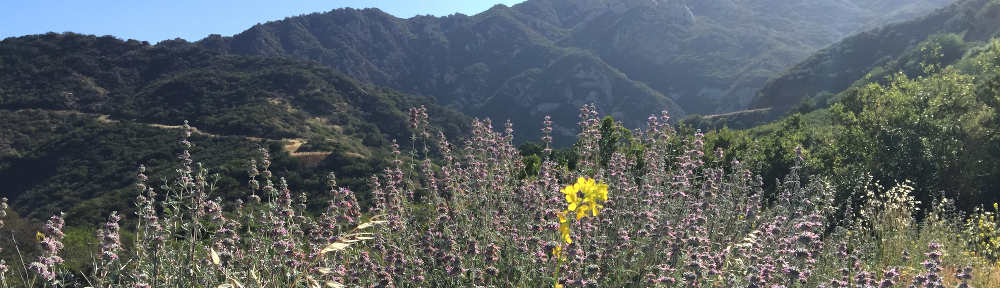
        Sweeping view of the Santa Monica Mountains from the New Millenium Trail.